
Staykind
La Sosta di Ottone
Six rooms above Levanto
About twenty years ago, Angela and her husband bought an old stone house in the hills above Levanto as a place for the family. Today it is La Sosta di Ottone III, a guesthouse with six rooms. I went up to meet her in October .
Read time 7 minutes
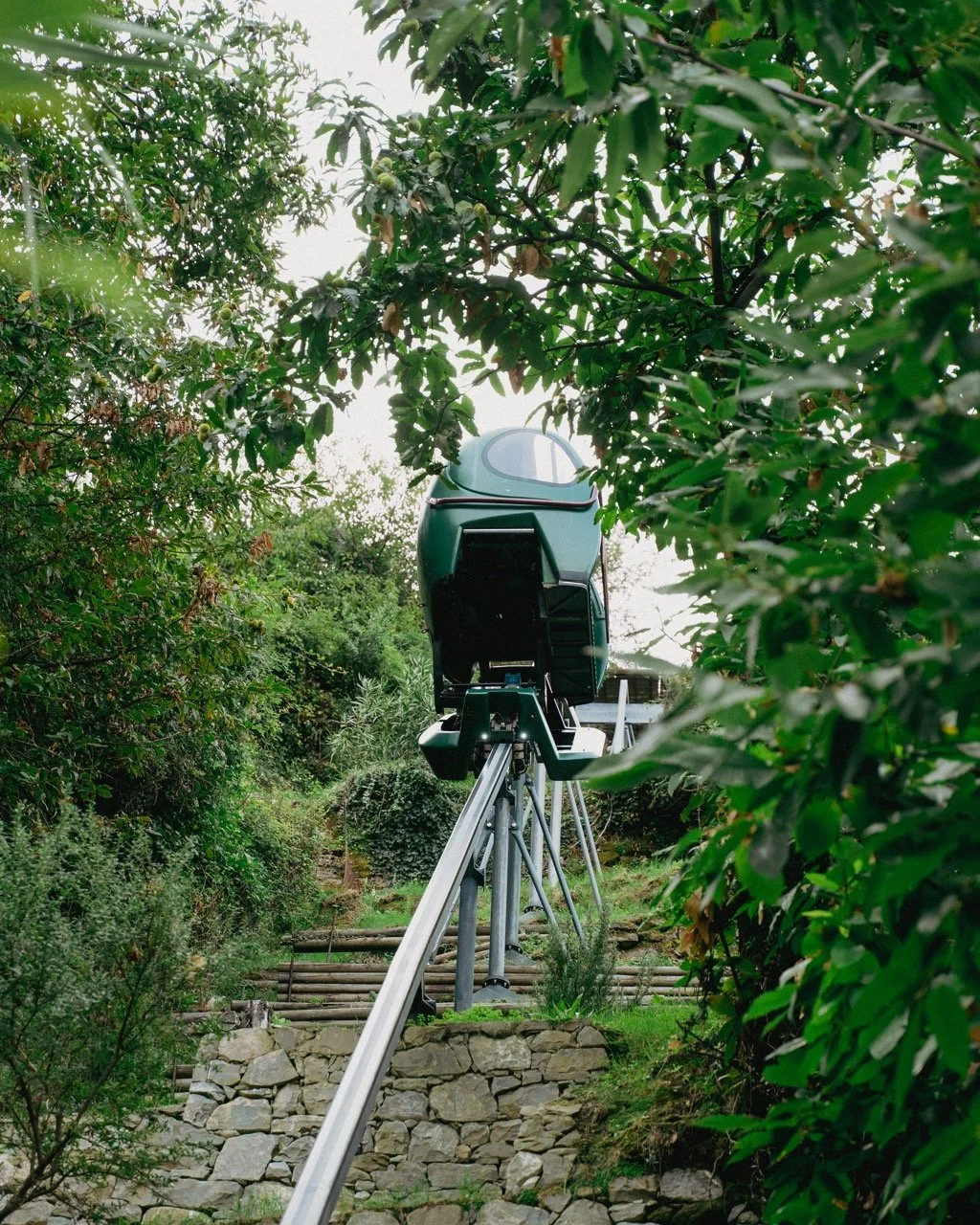
The first thing you notice about La Sosta di Ottone III is how you get there. At the bottom of the hill a small monorail car waits on a single rail, and once you sit down it starts to climb, slowly and steeply, up through terraces of olive trees and vines. The road drops away behind you. With every metre it gets a little quieter, and the ride itself starts to feel like the way in. By the time the car stops at the top, you’ve already slowed down.
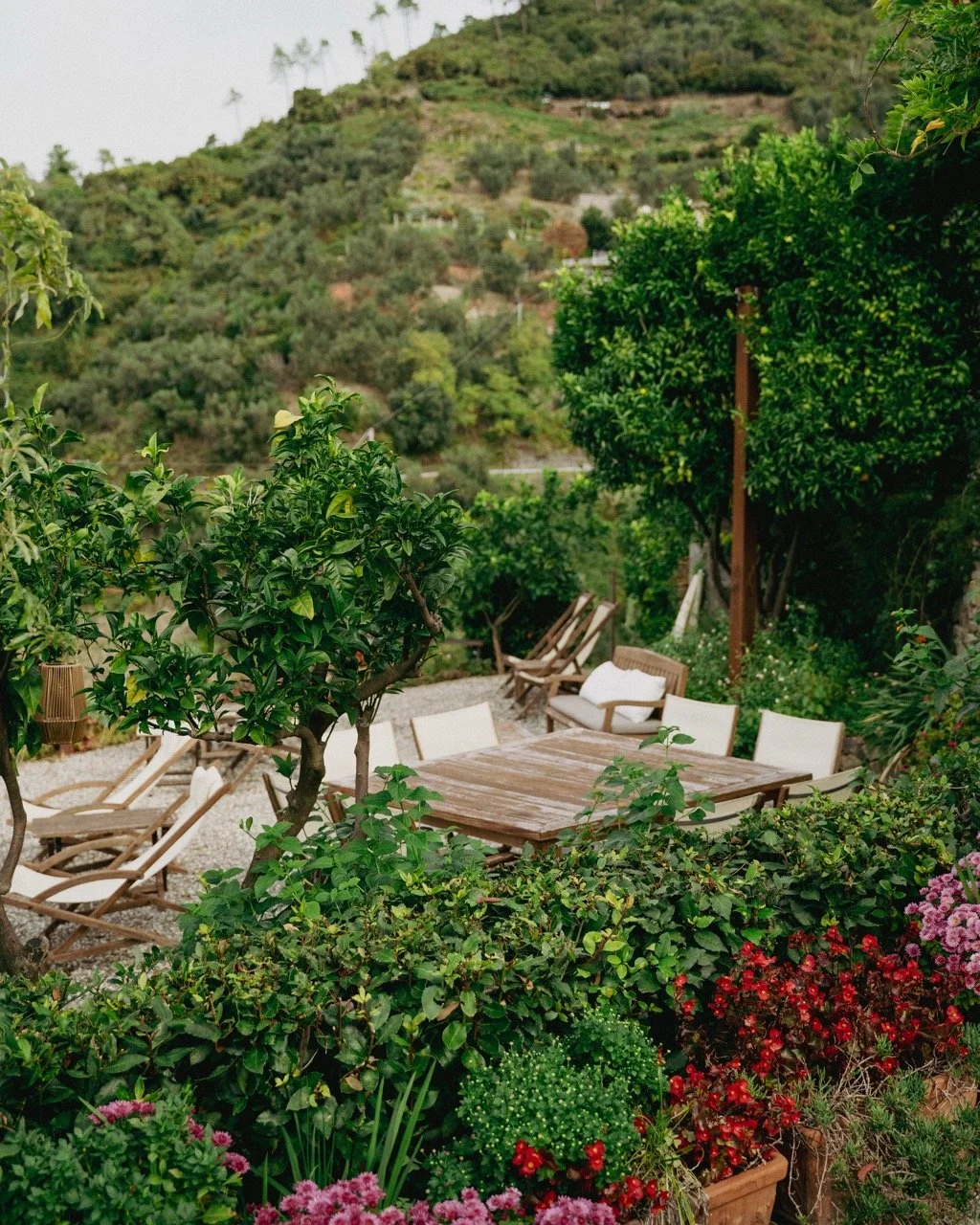
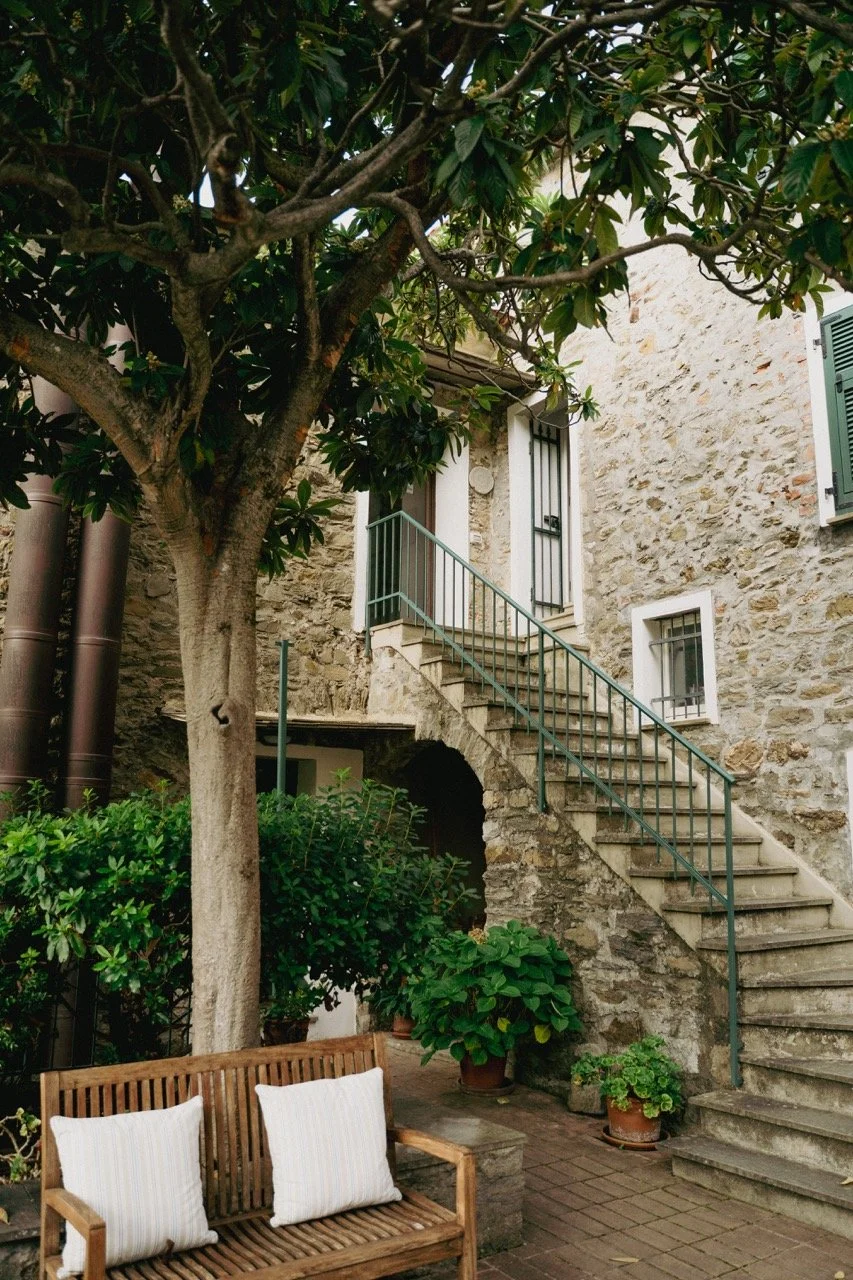
Up here stands an old stone house, its green shutters half open. Below it the hill falls away towards Levanto, and beyond the town the mountains close in from both sides and leave just enough room for the sea. In the garden the vine leaves over the pergola had turned red. There are six rooms here, and you understand quite quickly that nobody is in a hurry to add a seventh.
Angela runs the house with her husband, and she didn’t come from hospitality at all. She was born in Rome into a Canadian family and spent most of her working life in finance. This stretch of Liguria was where the family came on holiday, and when she and her husband bought the house about twenty years ago, a hotel wasn’t really the idea. They wanted a place of their own, something they could shape themselves. The guests came later. Four years ago she left finance for good, and since then the house has had all of her. She lives down in Levanto, by the water. She was just as curious about me as I was about her. She wanted to know who I was, what I do and why I travel from one house to the next. I left with the feeling that this curiosity about people is a big part of why the place feels the way it does.
The House
Once you start looking, you see how much of the house comes from the valleys around it. The chairs were made in Chiavari, a little further up the coast. The bathroom floors are black slate from Lavagna, laid in octagons with small squares of white marble between them, and in other rooms the floor is Rosso Levanto, a deep red marble with white and green veins that comes out of the hills behind the town. The paintings on the walls are by local artists. Angela loves art, and it shows in every room, from a huge two-part canvas in gold, white and dark blue to the small framed prints hanging above a bed.
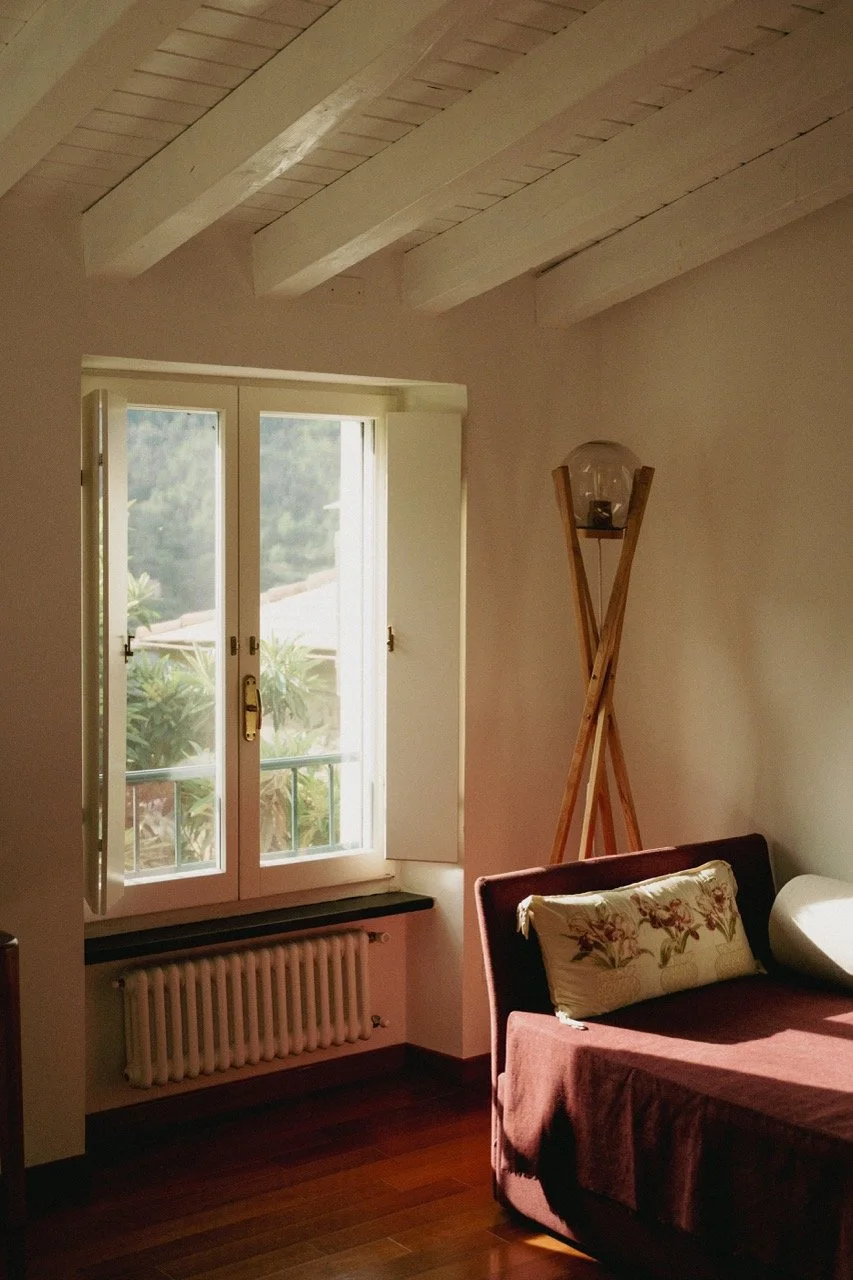
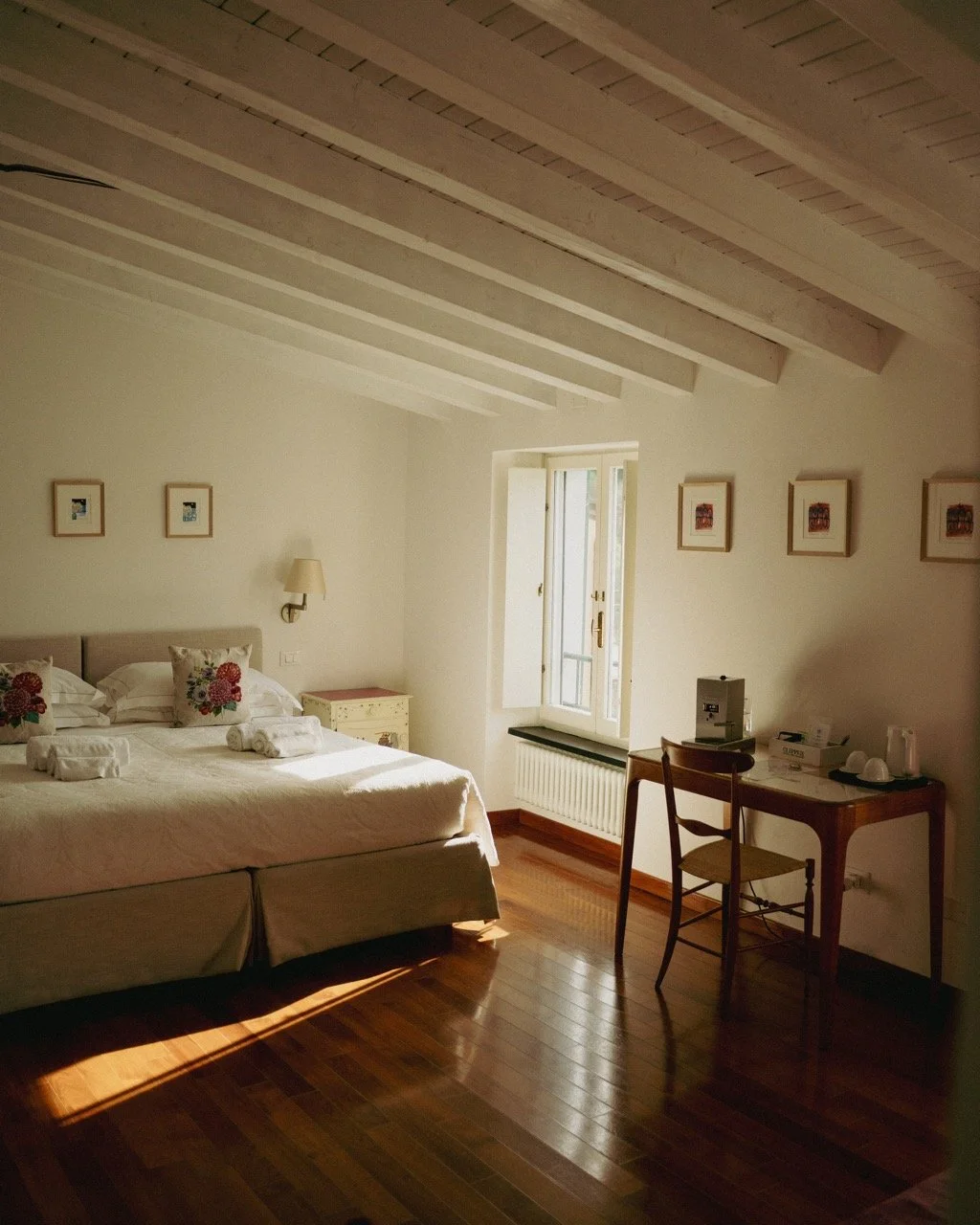
The colours have their own story. The stone outside couldn’t be painted, so Angela brought the colours of the Cinque Terre houses indoors instead. One room is pale blue, with the window frames picked out in a darker blue. Another is white, with painted wooden beams and a Chiavari chair at the desk, and in the late morning the sun lies in a long stripe across the wooden floor. Some of the design comes from further away, but it has been part of the house just as long. Luceplan in Milan was involved from the very beginning, twenty years ago, and their orange Costanza lamps still stand on the bedside tables. In the bathroom there is a green glass mosaic by Bisazza, with flecks of copper that catch the light.
“We never really set out to open a hotel. We wanted something of our own.”
The same thinking reaches the table. The wines come from producers in the region, chosen by a sommelière with a soft spot for natural wine. She no longer works at the house, but she still puts the list together. The juices are local, the cook works with whatever the season brings, and some of the dishes are so particular to this corner of Liguria that even Italian guests haven’t heard of them. Angela told me that the rule makes life easier. Once you’ve decided that everything has to come from here, a lot of choices are already made.
There is no spa, and there are no televisions in the rooms. When I asked about it, Angela said that we’re surrounded by noise all day anyway, and that people coming here shouldn’t be handed a long list of things to do. Instead the house has what it calls the Day Designer. Angela loves recommending things, and after twenty years she knows the area inside out, which trails off the beaten track are worth it or where to hire a boat for the day.
She usually suggests one thing a day, maybe two. A walk, for instance. These aren’t the Alps, she said, you don’t need boots or any special gear. One of the categories on the house’s website is simply called Dolce far niente. The rest of the day the house more or less takes care of itself, while the sun travels once around the building and the light keeps moving through the rooms.
Living this far up the hill also means thinking carefully about waste, and over the years that has become part of how the house works. None of it feels like doing without. The slippers in the bathroom are soft, washable ones from Ledd that go back into the laundry after each stay, and the soaps and creams come from Santella in Florence, in bottles that are refilled rather than thrown away. And the sheets don’t need to be changed every day.
Angela has watched her guests change over the years. For a long time people wanted more, a pool, a spa, something else on top. Those guests are still around. But since Covid she has noticed more people arriving who mainly want to switch off and to feel close to the place they’re in, and this house suits them.
“You won’t get rich. But you can express yourself.”
At some point I told her that I dream of running my own hotel one day. She didn’t try to talk me out of it, but she didn’t make it sound easy either. Looking back she is glad they did it, she said. There are also days when she isn’t, because a hotel has so much going on behind the scenes that guests never see. You have to love it, she told me. You won’t get rich, and money shouldn’t be why you do it. What you get instead is a way of expressing yourself. And you need luck, she added. I’ve heard that from a lot of hoteliers this year, but rarely said so plainly. On the way back down the monorail takes its time again. I’ve stayed in plenty of hotels, and I can’t think of one that felt as peaceful as this one.
Staykind is an interview series about the people who shape hospitality their decisions, their doubts, and what they'd do differently.